Testing & Services
Pipe Jacking
Called microtunneling when the pipe diameter is small
At a Glance
As with other tunneling methods, a range of mechanical excavation systems provide the shield, the digging and support at the face to suit different ground conditions. Build accuracy is on par with normal tunneling. Compared with segmental tunnels, pipe jacking causes less overbreak, gives strong ground support and limits ground movement.
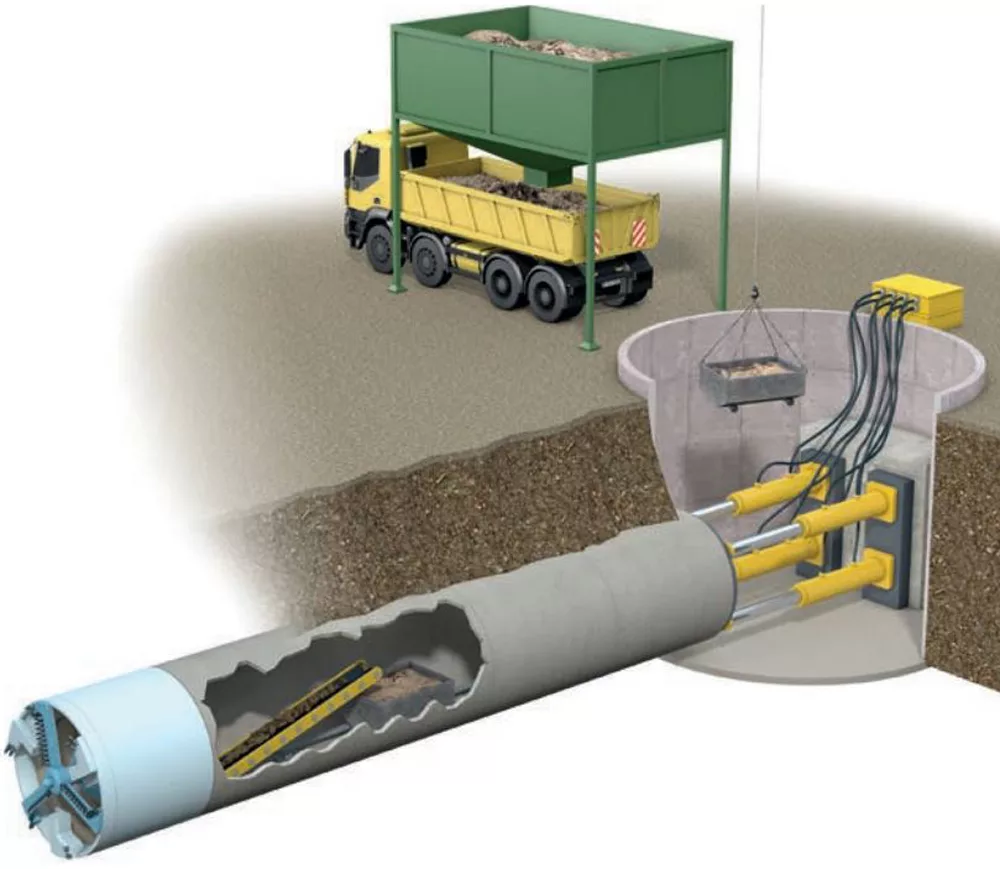
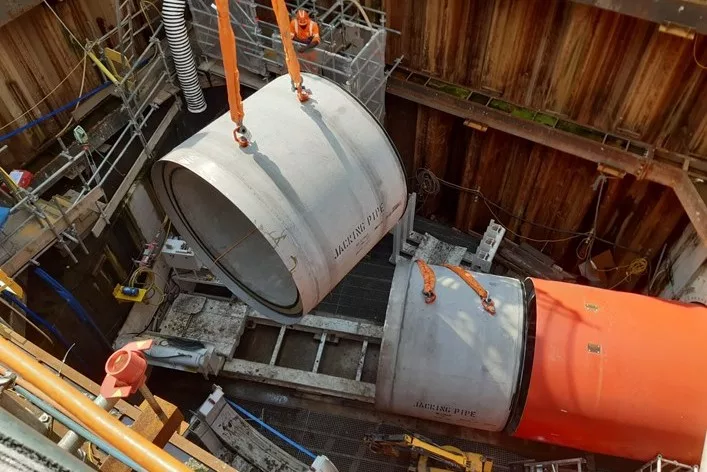
Pipe jacking (called microtunneling at smaller diameters) is a way of laying ducts, culverts and pipelines underground. The pipes are driven through the ground by hydraulic jacks behind a shield while digging takes place inside it. The tunnel and a strong, watertight pipeline are formed at the same time, making the method both flexible and efficient.
In practice there is almost no limit on the length of a pipe jack, though engineering and cost considerations can set bounds. Mechanical and remote-controlled excavation systems make drives of several hundred meters possible, on straight or curved alignments. Tolerances are as good as with conventional tunneling, with less overbreak and better support of the surrounding ground. Because the jacked pipes form the final pipeline, no secondary lining is required. On longer drives, intermediate jacking stations spread the thrust so forces stay within what the pipe can take, and lubricant injected around the pipe string cuts friction. Common applications are sewers, water mains and crossings under highways, railways and buildings where an open trench is not practical.
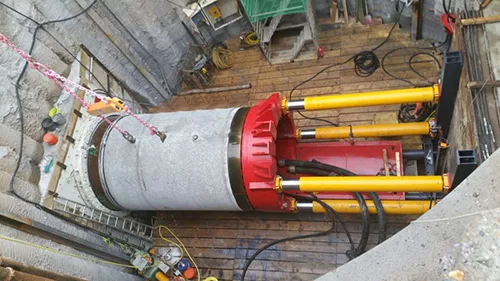
Installing a pipeline by pipe jacking starts with building a thrust pit and a reception pit at manhole locations, sized to suit the project. A thrust wall gives the jacks something to push against; in weak ground it may need special measures. A thrust ring spreads the jacking force evenly around the pipe’s circumference, and the reception pit is where the shield is recovered at the end of the drive.
✓ One source for everything a general contractor needs for pipe jacking
✓ Job site support from our team
✓ BETTER PROFIT MARGINS on every job
Microtunneling and Pipe Jacking
The term microtunneling first meant building small-diameter, pipe-jacked tunnels that were fully automated and that no one entered. It now applies to remote-controlled pipe jacking at nearly any diameter. From a control cabin at ground level, the operator steers the tunnel boring machine using laser guidance, as hydraulic jacks in the launch shaft push the string of pipes along behind it. With nobody working underground, microtunneling offers a safe, precise method for laying utility crossings, sewers and water mains beneath roads, railways and rivers, causing minimal disruption above ground. Pumps, hydraulic jacks and other support equipment for these drives come from WB Equipment.
Discuss your project with WB Equipment
One team handles rentals, sales and service, backed by NIST-traceable calibration we do ourselves and field support anywhere in North America.
Key Terms for Pipe Jacking
Short explanations from the WB Knowledge Base of the words you'll meet on this kind of job.
-
Jacking Frame
Launch pit frame carrying the main jacks that drive pipe sections underground.
-
Pipe Jacking
Trenchless installation where heavy hydraulic jacks force pipe sections underground.