
Testing & Services
Bridge Roll-Ins
Synchronous Hydraulic Systems, 0 – 1500 TON Capacity
At a Glance
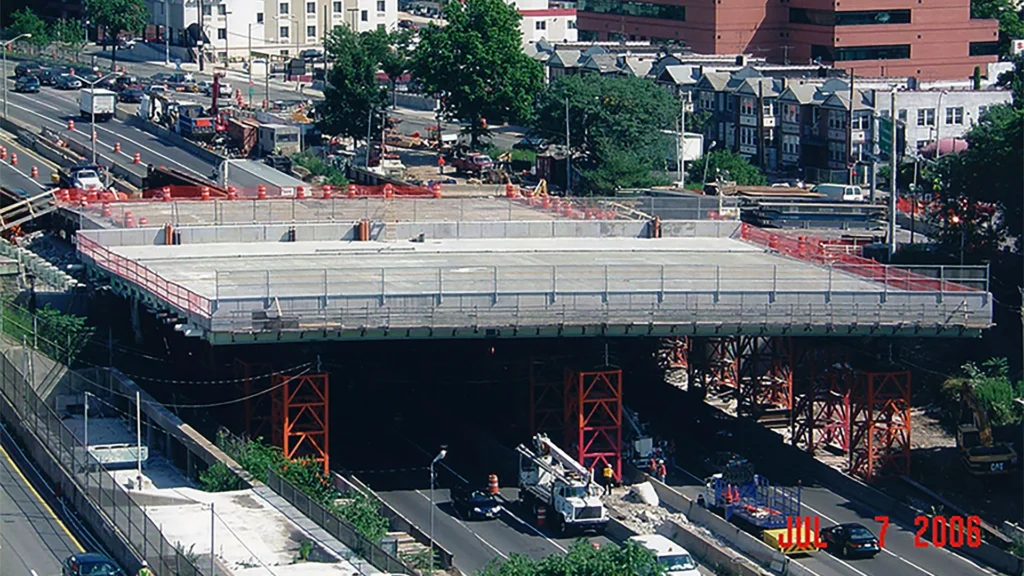
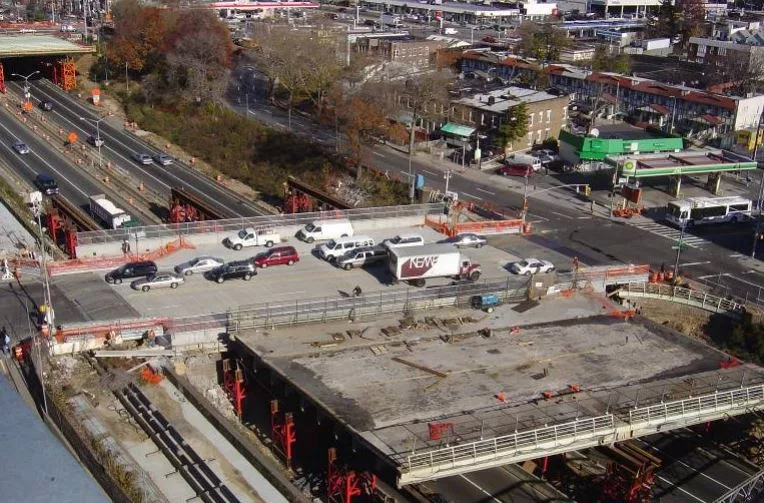
On I-678, a purpose-built Synchronous Jacking System with sixteen points lifted out the old bridges and set new ones in their place. The same approach was used on both the Hillside Avenue and Jamaica Avenue Bridges, where 110-foot superstructures were taken out, abutments were moved and a longer two-span bridge was installed. The wider I-678 work added lanes, safety upgrades, new pavement and improved infrastructure.
BRIDGE ROLL-INS, Synchronized
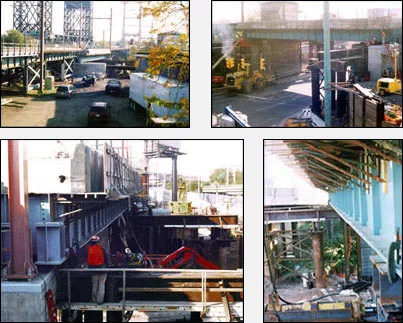
The existing I-678 bridges were raised and taken out with a purpose-built Synchronous Jacking System using sixteen points. After lifting, they were set on rollers and moved to one side to be demolished and hauled away. The new bridge was then rolled into place and set down with the same jacks.
The method worked on both the Hillside Avenue Bridge and the Jamaica Avenue Bridge on I-678, a major achievement. The work involved taking out complete 110-foot superstructures, moving the abutments, replacing the stem of the center pier and installing a new continuous two-span bridge that is 28 feet longer than the old one.
The I-678 (Van Wyck Expressway) work also widened sections to add acceleration and deceleration lanes, added full-width flush shoulders for safety, repaved six lanes for more than half a mile, and upgraded drainage, lighting, ITS, signs and landscaping.
New York State DOT Region 11 rebuilt the Jamaica Avenue Bridge over the I-678 Van Wyck Expressway using a Roll-in/Roll Out Method. That work involved taking out the whole 110-foot-long superstructure, moving the abutments and putting in a new center pier stem.
Discuss your project with WB Equipment
One team handles rentals, sales and service, backed by NIST-traceable calibration we do ourselves and field support anywhere in North America.
Key Terms for Bridge Roll-Ins
Short explanations from the WB Knowledge Base of the words you'll meet on this kind of job.
-
Bridge Roll-In
Moving a span built off to the side across onto its supports with skid tracks.
-
Slide-In Bridge Construction
Assemble the replacement deck beside the road, then shift it across during a short closure.