
Testing & Services
Hydraulic Jack & Loadcell Calibration
NIST-Traceable Calibration Of Hydraulic Jacks And Loadcells, 0-1500 Tons
Calibrating Loadcells
Calibrating a load cell makes sure it measures force accurately, whatever the application. “Traceable to NIST” tells you the calibration can be checked back to NIST (National Institute of Standards and Technology). Calibrating regularly, keeping the force on a pure line, and choosing the right loading frame all matter. For mass and force work, calibration standards need traceability to SI units, which makes results more reliable. Deadweight primary standards that meet ASTM criteria are key to that traceability, with corrections made for gravity and environmental effects during mass and force measurement and the load cell calibration procedure.
WHAT DOES NIST TRACEABLE CALIBRATION MEAN?
With NIST traceable calibration, the results listed on your certificate can be followed all the way back to NIST mass standards. To count as NIST traceable, an item has to meet particular guidelines that NIST has set.
NIST describes traceability as a quality of a measurement result: it can be tied to a reference through an unbroken, documented chain of calibrations, with each step contributing to measurement uncertainty. Put simply, the calibration weights can be traced to NIST mass standards, and every link in that chain adds a little to their uncertainty.
HOW DOES A MEASUREMENT RESULT BECOME NIST TRACEABLE? A number of key requirements have to be met before something is accepted as NIST traceable:
When every one of these conditions is met, the measurement results reported count as NIST traceable.
✓ State clearly what is being measured.
✓ Identify the working standards used to take measurements.
✓ Report the measurement results explicitly.
✓ Record the specifications of the reference standards the working standards were checked against, including when they were last calibrated.
✓ Run an internal program that maintains the integrity and traceability of the working standards.
Calibrating Heavy Jacking Equipment
Calibrating heavy jacking equipment is key to even load distribution, safety and efficiency when lifting. The work checks that hydraulic systems, load cells and pressure sensors read accurately and perform within their specified tolerances.
Why Calibration Matters
✓ Makes sure lifting forces are spread evenly so the structure is not damaged.
✓ Stops overloading that can cause mechanical failure.
✓ Keeps work in line with industry standards and safety rules.
✓ Makes jacking equipment more reliable and longer-lasting.
Main Calibration Equipment
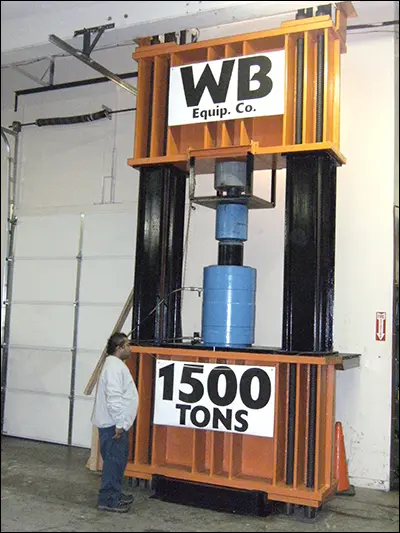
Good calibration needs the right tools. Jacks, cylinders and load cells are tested in a 1,500-ton test frame of our own against NIST-traceable reference standards, so you can rely on every reading in the field. The main equipment used includes:
✓ Load Cells – Read the real force the jacks apply and turn it into an electrical signal for recording and analysis.
✓ Pressure Gauges – Track the hydraulic pressure in the jacking system to confirm it matches the target load.
✓ Calibrated Hydraulic Pumps – Allow fine adjustment of hydraulic pressure so force is distributed accurately.
✓ Data Acquisition Systems – Gather live sensor readings so performance can be reviewed and fine-tuned.
✓ Dial Indicators & Displacement Sensors – Track how far the jacks move and extend to confirm the lift is accurate.
How We Calibrate
In construction, bridge jacking, heavy lifting and similar fields, where safety and efficient operation depend on precision, regular calibration is essential.
✓ Inspection & Setup – Jacks, hoses and hydraulic parts are visually checked for wear and leaks, then fitted with pressure transducers and load cells.
✓ Baseline Measurement – Zero settings are confirmed by testing the jacks with no load applied.
✓ Incremental Load Testing – Loads, real or simulated, are applied step by step while the load cell and pressure gauge readings are logged.
✓ Comparison with Reference Standards – Readings are checked against certified standards for any deviation, with adjustments made where needed.
✓ Final Verification – The system is run under full working conditions to confirm force is applied accurately and in sync.
✓ Documentation & Certification – A calibration report records the results and shows compliance with regulatory standards.
Calibrating Hydraulic Jacks and Loadcells
Calibrating hydraulic jacks and load cells keeps force measurements accurate. The device’s readings are compared with a known standard, usually traceable to NIST. Calibrating regularly keeps the equipment precise, confirms it performs as it should and keeps work safe wherever exact force measurement is needed.
Discuss your project with WB Equipment
One team handles rentals, sales and service, backed by NIST-traceable calibration we do ourselves and field support anywhere in North America.
Key Terms for Hydraulic Jack & Loadcell Calibration
Short explanations from the WB Knowledge Base of the words you'll meet on this kind of job.
-
Calibration Certificate
Paper record of test results proving a jack, gauge or load cell reads true.
-
Jack Calibration
Proving jack, gauge and load cell readings against a traceable reference.